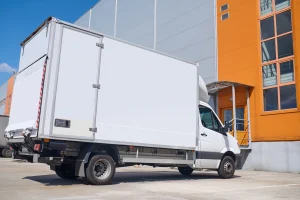

Box truck owner-operator requirements depend on the truck you drive and the work you plan to take. Before you buy a truck or accept your first load, you need to know which rules apply to your operation, not just whether the seller calls it a “non-CDL truck.”
Start with THREE questions: What is the truck’s weight rating? Will you haul interstate freight? And will you run under your own authority or a carrier’s? This guide walks through the paperwork, insurance, and driver requirements that follow from those answers. Use the table for a quick check, then read the sections that match the work you plan to do.
Start With Your Truck, Your Loads, and Your Authority
You do not need every permit mentioned in every trucking guide. You need the ones that fit your operation. A driver working locally under a carrier’s authority has a different setup from someone finding interstate loads under their own name. Before you start filling out applications, write down your truck’s weight rating, where the freight will move, and whose authority you will use.
The first is your truck’s gross vehicle weight rating, or GVWR, which is the maximum loaded weight the manufacturer assigns to the truck. It is printed on the certification label, usually on the driver’s door jamb. The second is whether you operate in interstate commerce, which FMCSA describes as transportation between a place in one state and a place outside it. The third is whether you haul for hire under your own operating authority or under a carrier’s.
The table below gives you a starting point. It is not a substitute for checking the conditions and exceptions that follow, especially if your work changes from local deliveries to interstate loads.
| Requirement | When it usually applies | Where to confirm |
|---|---|---|
| CDL (Class B) | Single truck rated 26,001 lbs or more | State DMV, FMCSA |
| USDOT number | Interstate work with a truck rated 10,001 lbs or more; some states also require it for intrastate work | FMCSA, your state agency |
| Operating authority (MC number) and BOC-3 | Hauling regulated freight for hire across state lines under your own authority | FMCSA |
| Insurance on file with FMCSA | Carriers operating under their own authority | FMCSA, 49 CFR Part 387 |
| DOT medical certificate | Interstate drivers of trucks rated 10,001 lbs or more | FMCSA, certified medical examiner |
| Hours of service and logs | The same drivers, unless an exception applies | FMCSA |
| UCR annual registration | Interstate carriers with trucks of 10,001 lbs or more | Your base state’s UCR office |
| Business license, state permits, taxes | Everyone | State and local offices, IRS, an accountant |
Here is how that plays out in practice. Say you own a box truck rated at 14,500 pounds and haul a pallet load from Phoenix to Tucson for a broker. No CDL is involved, and because both cities are in Arizona, state rules matter more than the federal registration rules, although a shipment that began in another state could change the picture. Take the same truck to Albuquerque and you are interstate. Now you need a USDOT number, a medical certificate, and a plan for hours of service, and if you are hauling for hire under your own name, operating authority and insurance on file as well.
CDL or No CDL: Start With the Weight Rating
A Class B commercial driver’s license is required for a single vehicle with a GVWR of 26,001 pounds or more, according to the federal vehicle group definitions in 49 CFR 383.91. Many box trucks sold for local and regional freight are built to sit below that line, which is why so many owner-operators drive them without a CDL.
A 26-foot box does not tell you whether you need a CDL. Two trucks with the same box length can have different weight ratings. One may be rated at 26,000 pounds and another at 26,001 pounds. That one-pound difference puts them on opposite sides of the rating threshold.
Ask for a clear photo of the certification label before you travel to look at a used truck. Read the GVWR yourself rather than relying on “non-CDL” in the listing. You are buying a specific truck, not a description of one.
Towing changes the math. A combination with a gross combination weight rating of 26,001 pounds or more falls under Group A when the trailer is rated above 10,000 pounds, so check the combined rating before you hook anything up to your truck.
No CDL does not mean no federal rules. FMCSA’s safety regulations use a separate and lower threshold, and a vehicle rated at 10,001 pounds or more in interstate commerce counts as a commercial motor vehicle under those rules. A truck rated at 14,500 pounds and one rated at 25,999 pounds both land in that group, and the rules look at rated weight or actual weight, whichever is greater. That is why the medical certificate, hours of service, and cargo rules later in this guide apply to drivers who never needed a CDL. (FMCSA briefing)
Check your license requirements with your state DMV before buying, since states can add requirements of their own. If you are comparing a lighter truck with a heavier one, settle the license question first. There is no point arranging financing for a truck you cannot yet drive.
USDOT Number: When a Box Truck Needs One
FMCSA says that interstate operators of vehicles with a GVWR or gross combination weight rating of 10,001 pounds or more need a USDOT number. That puts most box trucks in scope for interstate work and separates them from lighter cargo vans, which often sit below the line, although heavier vans can cross it. If you are weighing a van instead, our guide to cargo van work, trends, and getting started covers that side of the decision. (FMCSA, Do I Need a USDOT Number?)
The number is the identifier FMCSA uses to track your company’s registration. It also comes with a recurring duty, because FMCSA expects registrants to complete a biennial update that keeps company information current. Put the update date in your calendar when you register. A missed update can put your number at risk of being inactivated, although FMCSA has temporarily paused those inactivations during the Motus transition, so check the registration hub for the current status. (FMCSA registration resources hub)
Local work needs a check too. Staying inside one state does not automatically remove the USDOT requirement. FMCSA directs intrastate operators to their state’s rules, and some states require a number even if the truck never crosses a border. Tell your state’s motor carrier office the truck’s rating and the kind of freight you plan to haul, rather than asking only whether “box trucks need a DOT number.”
New applications now go through Motus, FMCSA’s registration system, with an identity verification step. You can apply directly with FMCSA. If you use a filing service, ask exactly what you are paying it to do. Keep access to your own account and save copies of the application and filings.
What Changed With Motus
FMCSA moved registration to Motus on May 14, 2026, and some older guides still describe the previous system. FMCSA’s May 2026 fact sheet says Motus keeps issuing docket numbers with the same MC, MX, and FF prefixes, and that existing USDOT and docket numbers do not change. New USDOT and docket numbers are randomized to reduce fraud, each newly granted authority gets its own docket number, and new USDOT numbers carry a suffix that shows the type of registered entity. If an article tells you MC numbers have disappeared, check its date, because the FMCSA fact sheet says they continue. (FMCSA fact sheet)
Your Own Authority or a Carrier’s: What Are You Taking On?
A USDOT number identifies you. Operating authority is the separate permission to haul freight for pay. FMCSA says companies need interstate operating authority, known as an MC number, in addition to a USDOT number when they operate as for hire carriers moving federally regulated freight across state lines. Carriers that only haul their own goods, haul exempt commodities, or stay inside a federally designated commercial zone do not need it. For a box truck owner-operator pulling general freight between states, that usually means you either get your own authority or work under someone else’s. (FMCSA, What is Operating Authority and who needs it?)
Running Under Your Own Authority
Getting your own authority means three pieces have to line up. You submit the application, you file a process agent designation known as Form BOC-3, and your insurer files proof of coverage with FMCSA. FMCSA’s own status messages show where an application can stall, listing reasons such as pending FMCSA review, pending process agent filings, and pending financial responsibility filings. An application can sit pending because any one of those three pieces is missing, so track all three from the start. (FMCSA, Changes to FMCSA Registrations in Motus)
With your own authority, you decide which customers to pursue and which loads to accept. You also take responsibility for keeping the operation compliant, arranging insurance, and managing the paperwork. The application is only the beginning of that work.
Before choosing this route, think through an ordinary week: who will follow up on a missing filing, answer a customer’s insurance question, and keep records current while you are out driving? If that person is you, allow time for the office work as well as the loads.
Running Under a Carrier’s Authority
Leasing onto a carrier means hauling under its authority rather than applying for your own authority for those loads. That can give you a way to find freight without building every customer relationship yourself. It does not mean you can stop asking questions about registration, insurance, or who pays the bills.
Read the agreement with a specific load in mind. Whose USDOT number and authority will be used? Do you need a separate registration for your operation? Who covers the freight, and who pays for fuel, tolls, repairs, and insurance? Ask how your pay is calculated, which deductions come out of the settlement, when you get paid, and how either side can end the agreement. Get those answers in writing before signing.
One more point belongs here. Calling yourself an owner-operator does not settle how the IRS treats the relationship. The agency looks at behavioral control, financial control, and the overall relationship between the parties instead of the label in the contract. If the arrangement looks more like a job than a business, talk to a tax professional before you rely on it. (IRS Topic No. 762)
Insurance: Enough to Operate, and Enough for the Loads You Want
Federal rules say a motor carrier may not operate until it has at least the minimum level of financial responsibility in place. For carriers that haul nonhazardous property for hire in interstate commerce with trucks rated at 10,001 pounds or more, the minimum under 49 CFR 387.9 is $750,000.
The federal minimum is a public liability requirement. It concerns injury and property damage to other people; it is not cargo coverage for the freight in your box. A policy that meets the federal requirement may still fall short of a customer’s carrier agreement.
Before accepting a load, compare the customer’s insurance requirements with your actual coverage. Do not assume that a certificate showing a large liability limit answers every question about the freight.
Get insurance quotes before committing to the truck. Tell the agent what you plan to haul, where you plan to run, and whether you will work under your own authority or a carrier’s. The truck, your driving history, and your operating radius can affect the price.
Ask the agent to explain what is covered and what is excluded. If you lease onto a carrier, compare its coverage with yours instead of assuming the carrier handles everything. Keep written answers with your policy documents. This guide does not give a premium estimate because a useful quote needs the details of your operation.
The Rules Still Apply After the Paperwork Is Done
A registration number does not answer every question about the workday. You still need to know whether you need a medical certificate, how to record your time, and how to secure the freight. These federal safety rules can apply to interstate box truck drivers without a CDL, including drivers of trucks rated at 10,001 pounds or more.
Medical Certificate and Drug Testing
FMCSA requires drivers of vehicles rated at 10,001 pounds or more in interstate commerce to hold a DOT medical certificate. You get it from a certified medical examiner, and drivers without a CDL carry a copy of the certificate rather than having it recorded on a license. Federal drug and alcohol testing rules follow the CDL instead of the medical card, since they cover vehicles in the 26,001 pound category. A box truck rated below that generally falls outside the federal program, although a customer or insurer can still require testing by contract. (FMCSA medical certificate FAQ) (FMCSA briefing)
Treat the medical certificate and the testing question as separate checks. When you book the exam, explain whether you hold a CDL and what truck you will drive. If a carrier or customer asks for testing, clarify whether it is a federal requirement or a condition of working with that company.
Hours of Service, Logs, and ELDs
For drivers of property carrying vehicles, FMCSA’s hours of service rules cap driving at 11 hours inside a 14-hour window and limit on-duty time to 60 hours in 7 days or 70 hours in 8 days. The short haul exception relaxes the paperwork for local drivers. If you operate within a 150 air mile radius of your normal work reporting location and return within 14 hours, you can skip the daily log requirement. (FMCSA summary of hours of service regulations)
That exception also explains why many box truck drivers never use an electronic logging device. Drivers who need logs on no more than eight days in any 30-day period are not required to use an ELD. A driver who qualifies for the short haul exception rarely needs logs at all. If you start taking longer trips on a regular basis, track how many days you cross that line, because the ninth day in a 30-day window changes your obligations. For a closer look at how route length affects the work, see our comparison of long haul and regional trucking for owner-operators. (FMCSA, ELD exceptions)
Before accepting a longer run, look at the whole day rather than just the mileage between pickup and delivery. Review where the trip starts, whether you can return within the applicable window, and whether the log or ELD exception still fits. Do not carry yesterday’s local-work assumptions into a different kind of trip.
Cargo Securement
A driver may not operate a commercial motor vehicle unless the cargo is properly distributed and adequately secured. The rule also requires you to inspect the cargo and its securement devices within the first 50 miles of a trip, and to check again after any change of duty status, after 3 hours of driving, or after 150 miles, whichever comes first. A closed box makes this feel optional, since you cannot see the load from the cab, but a shifted pallet in a 26-foot box can damage freight and change how the truck handles. Straps, load bars, and a habit of walking to the back door at the first stop are cheap compared with a claim. (49 CFR 392.9)
Before leaving the pickup, check the load rather than assuming a closed rear door means everything is secure. If you cannot inspect it, clarify the situation before you leave and check the applicable rule’s exceptions. Keep the required checks in mind when planning stops, not just when something feels wrong.
Business Setup, Taxes, and State Rules
Set up the business before receipts and payments start piling up. Talk with an accountant or attorney about whether to work as a sole proprietor or form an LLC, obtain an EIN, and check the business licenses and state permits your operation needs. Open a separate business bank account and choose a way to keep your books from the first load.
Keep fuel receipts, repair invoices, insurance documents, and settlement statements together. A simple system you use every week is more useful than an elaborate one you keep putting off. You want to be able to find a document without searching through the cab and your phone at tax time.
Interstate carriers with trucks rated at 10,001 pounds or more also have to deal with Unified Carrier Registration. UCR requires individuals and companies running commercial vehicles in interstate commerce to register through their base state and pay an annual fee that depends on fleet size. (Connecticut DMV, UCR program)
State requirements belong on the same checklist as federal registration. Intrastate rules, permits, and weight thresholds vary. If you are adding work in another state, describe the planned operation to its motor carrier office and ask which requirements apply. Keep the answer with your records so you can refer to it when your routes change.
Before You Accept a Load, Check the Paperwork and the Fit
Getting registered and getting accepted for a particular load are different checks. Shippers and brokers generally want to confirm that your USDOT number and authority are active, that your insurance certificate is current, and that the truck and driver match the job. Our look at why more shippers work with owner-operators explains the verification steps from the shipper’s side, which helps you see your own paperwork the way they do.
The truck has to match the load as well as the paperwork. Keep the box clean and check its condition before offering it for work. Ask what equipment the delivery needs and whether you can handle the freight being offered. A truck being available does not automatically make it suitable for the job.
Before saying yes, put the load details next to the truck’s actual capabilities and the customer’s requirements. Resolve anything unclear before booking, not after arriving for pickup.
A Launch Checklist for Box Truck Owner-Operators
Work through this checklist before taking your first load. Mark items that do not apply to your operation only after checking why they do not apply.
- Find the GVWR on your truck’s certification label and note it, along with the rating of any trailer you plan to tow.
- Decide whether your loads will stay inside one state or cross state lines.
- Confirm your CDL status with your state DMV.
- Apply for a USDOT number in Motus if your operation needs one.
- Choose your path: your own authority, which includes the BOC-3 filing, or another carrier’s authority, with the lease terms reviewed.
- Get commercial insurance quotes and confirm what will be filed with FMCSA.
- Book a DOT medical exam with a certified medical examiner and carry the certificate.
- Learn the hours of service rules and whether the short haul exception fits your routes.
- Register for UCR if it applies, and sort out state permits and local business licenses.
- Set up your business entity, bank account, and bookkeeping with an accountant, and keep a customer document folder ready.
Do not treat a submitted application as a finished item. Keep track of what is approved, what is pending, and what still needs a filing from someone else. Insurance and authority involve other parties, so follow up on those items while you handle the parts you can complete yourself.
Box Truck Owner-Operator Requirements: FAQ
Do I need a CDL to drive a box truck?
Start with the specific truck’s rating, not its box length. A single truck rated at 26,001 pounds or more falls into the Class B category described above; towing can bring the combination rules into play. Check with your state DMV. A truck below the CDL threshold can still be subject to federal safety requirements.
Do I need a USDOT number for a box truck?
For interstate work with a truck rated at 10,001 pounds or more, yes, according to FMCSA. Some states also require one for work that stays inside the state, so check with your state agency if you never cross a border.
Do I need my own MC number to haul box truck loads?
Not if you haul those loads under a carrier’s authority through a leasing arrangement. If you plan to haul regulated interstate freight for hire under your own operation, you generally need your own operating authority. Read the agreement carefully so you know whose authority and insurance cover the work. Hauling your own goods or exempt commodities is a different situation.
How much insurance does a box truck owner-operator need?
Check two things: the federal requirement for your operation and the coverage required by the customers you want to work with. They are not necessarily the same. Liability and cargo coverage also serve different purposes, so take the customer’s requirements to your agent rather than asking only for the cheapest policy.
Do box truck drivers have to follow hours of service rules?
Drivers of vehicles rated at 10,001 pounds or more in interstate commerce generally do, but exceptions exist. The short haul exception lets drivers who stay within 150 air miles of their work reporting location and finish within 14 hours skip daily logs. Review FMCSA’s summary to see whether your routes qualify.
Get Ready for the Work You Actually Plan to Take
Before chasing loads, be clear about which work your truck and paperwork are ready for. Keep a record of your registrations, insurance, medical certificate where required, and any outstanding items. If something is still pending, deal with it before committing to work that depends on it.
From there, focus on the jobs that fit your operation. Our related guides cover which freight suits a box truck best, how hotshot and box truck loads compare, and what to consider before growing from one truck to a small fleet.
When your paperwork is in order, find loads on Courierbrokers and see which delivery jobs fit your truck, your radius, and your schedule.
This is general information, not legal or tax advice. Rules change, so confirm each requirement with FMCSA, your state, and a qualified professional before you act.