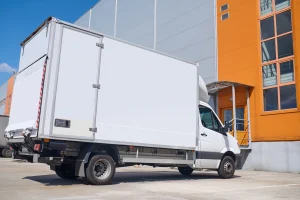

Box truck loads cover a wide range of freight, from retail inventory and palletized goods to commercial equipment, e-commerce deliveries, and time-sensitive shipments. For shippers, a box truck can provide a practical middle ground between a cargo van and a full-size tractor-trailer. For owner-operators, understanding which freight fits the truck is essential for finding suitable loads, controlling operating costs, and building consistent revenue.
The right freight depends on more than the truck’s length. Cargo weight, dimensions, loading requirements, delivery location, equipment, appointment times, and applicable regulations all affect whether a particular shipment is a good fit. This guide explains the types of freight that work well for box trucks, which shipments may require different equipment, how shippers can determine whether a box truck is appropriate, and how owner-operators can evaluate opportunities more effectively.
If you are comparing box truck freight with hotshot freight, see our guide to Hotshot Loads vs. Box Truck Loads for a broader comparison of equipment, revenue, operating costs, and profitability.
What Are Box Truck Loads?
Box truck loads are shipments transported in an enclosed straight truck, typically with a separate cab and cargo box. Unlike a tractor-trailer, a box truck does not use a detachable trailer. The enclosed cargo area provides protection from weather and can accommodate a variety of palletized, boxed, commercial, and consumer goods.
Box trucks are commonly used for local and regional transportation where a full-size tractor-trailer may provide more capacity than the shipment requires. Typical box truck freight can include retail inventory, palletized commercial goods, e-commerce and home-delivery freight, office equipment, furniture and fixtures, appliances, trade show and event materials, warehouse transfers, and partial or LTL shipments.
The best load is ultimately one that fits the vehicle’s legal weight and dimensions, available cargo space, loading equipment, route, and delivery requirements.
Box Truck Sizes, Payload, and Freight Capacity
Box trucks come in several sizes and configurations, so there is no single payload or pallet capacity that applies to every vehicle. A 26-foot box truck generally provides substantially more cargo space than smaller box trucks, but the usable capacity depends on the specific vehicle, body configuration, axle ratings, cargo layout, and equipment installed. Owner-operators should always check the manufacturer’s specifications and the vehicle’s certification information rather than relying on a general payload estimate.
GVWR stands for Gross Vehicle Weight Rating. It represents the maximum loaded weight specified for the vehicle. That number is important because the weight of the freight is only part of the calculation. The vehicle’s total weight can include freight, pallets, packaging, liftgate equipment, pallet jacks, tools, fuel, the driver and any passengers, and other equipment carried on the truck. A truck that appears to have enough cargo space may still be unable to legally carry a particular shipment because of weight limitations.
The Federal Motor Carrier Safety Administration explains that federal commercial motor vehicle requirements can apply based on factors including vehicle or combination weight ratings and the type of interstate operation.
Does a 26-Foot Box Truck Need a CDL?
A 26-foot box truck is not automatically a non-CDL vehicle. Under federal CDL standards, a Class B CDL generally applies to a single vehicle with a GVWR or actual gross weight of 26,001 pounds or more, subject to the applicable rules and exceptions. The FMCSA’s commercial driver licensing guidance provides the federal classification framework.
However, CDL requirements are not the same thing as every FMCSA safety requirement. FMCSA states that a commercial motor vehicle operating in interstate commerce can fall under federal safety regulations at a lower threshold of 10,001 pounds, depending on the applicable definition and operation. This distinction is important for box truck operators. A vehicle may not require a CDL under a particular federal CDL classification while still being subject to other commercial motor vehicle requirements. Operators should verify the rules that apply to their specific vehicle, cargo, and operating area before accepting freight.
The Best Types of Freight for Box Truck Loads
Box trucks are particularly useful for freight that requires more capacity and protection than a cargo van but does not require the full capacity of a tractor-trailer. The following categories are commonly well suited to box truck operations.
Retail and Store Replenishment
Retail inventory is a natural fit for many box truck loads. Shipments may include packaged consumer products, apparel, electronics, store fixtures, general merchandise, display materials, and restocking inventory. Retail deliveries can involve scheduled appointments and recurring routes. For carriers, repeat routes can make planning easier because the pickup locations, delivery locations, mileage, and expected service requirements become more predictable. For shippers, the enclosed cargo area also provides protection during transportation and can be practical for deliveries to locations where maneuverability matters.
E-Commerce and Final-Mile Freight
E-commerce has increased the importance of flexible delivery capacity. According to the U.S. Census Bureau’s Quarterly E-Commerce Report, U.S. retail e-commerce sales reached an estimated $326.7 billion in the first quarter of 2026, representing 16.9% of total retail sales for the quarter. E-commerce sales were up 9.8% from the first quarter of 2025. This data does not establish a specific demand level for box trucks, but it provides useful context for the continued importance of delivery and fulfillment networks.
Box trucks can be suitable for home goods, furniture, small appliances, packaged consumer products, multiple residential deliveries, and commercial final-mile shipments. The suitability of a box truck depends on the individual shipment and delivery requirements.
LTL and Partial Shipments
Less-than-truckload and partial shipments can also fit well within box truck operations. A shipper may not have enough freight to justify a full trailer but may still require more space, protection, or handling flexibility than a smaller delivery vehicle can provide. Box truck carriers may be able to serve these shipments individually or combine compatible freight when the equipment, route, timing, and cargo requirements allow. However, combining loads should never compromise weight limits, cargo security, delivery commitments, or safe load distribution.
Office Equipment and Commercial Supplies
Office and commercial shipments can be another strong application for box trucks. Examples include printers, IT equipment, office furniture, fixtures, packaged electronics, business supplies, and inventory transfers. These shipments often require careful handling and scheduled delivery. An enclosed box truck can provide cargo protection while offering more capacity than a standard cargo van.
Appliances and Furniture
Furniture and appliances can require more cargo volume than traditional parcel delivery. Box trucks can be suitable for these shipments when the vehicle has sufficient payload capacity and the delivery requirements can be handled safely. Depending on the shipment, carriers may also need a liftgate, pallet jack, moving equipment, additional labor, or inside delivery service. These requirements should be confirmed before accepting the load.
Event and Trade Show Materials
Trade shows, conferences, exhibitions, and corporate events often require timed transportation of equipment and display materials. Box trucks can work well for these shipments because they offer enclosed cargo space while remaining more maneuverable than larger equipment. Typical freight may include display panels, booth components, lighting equipment, packed cases, promotional materials, and event furniture. These loads may involve strict pickup and delivery windows, so carriers should evaluate waiting time, loading requirements, and return-trip opportunities before accepting them.
Freight That May Not Be a Good Fit for Box Trucks
Box trucks are versatile, but they are not suitable for every type of freight. Some shipments may exceed the vehicle’s available payload, cargo dimensions, or equipment capabilities. Potentially unsuitable freight can include extremely heavy machinery, oversized freight, freight requiring specialized trailers, certain temperature-controlled shipments, freight requiring specialized loading equipment, and hazardous materials subject to specific transportation requirements.
Hazardous materials require particular attention. FMCSA notes that certain hazardous-material transportation can bring federal requirements into play regardless of vehicle size when the material is transported in quantities requiring placarding. Carriers should therefore confirm the commodity, quantity, packaging, dimensions, weight, and applicable regulatory requirements before accepting specialized freight.
What Shippers Should Check Before Booking a Box Truck
A shipper should provide enough information for a carrier to determine whether the truck is appropriate. At minimum, provide pickup and delivery locations, pickup date and time, delivery deadline, number of pallets or pieces, cargo dimensions, total cargo weight, whether freight is stackable, loading method, unloading method, liftgate requirements, inside delivery requirements, appointment requirements, and special handling instructions.
Cargo dimensions matter just as much as weight. A lightweight shipment can still be difficult to transport if it is unusually long, tall, wide, fragile, or difficult to load. A shipment may have enough available payload but still be unsuitable because the cargo cannot be positioned safely inside the cargo box. Clear dimensions help carriers evaluate the load before arrival and reduce the risk of rejected or delayed pickups.
Liftgate and inside delivery can change the job. A shipment that requires a liftgate or inside delivery is different from a standard dock-to-dock pallet delivery. A liftgate allows freight to be lowered from the truck when a suitable loading dock or forklift is unavailable. Inside delivery requires the driver to move the freight beyond the truck, potentially increasing labor, handling time, and physical demands. These requirements should be included in the load description rather than communicated only after the carrier accepts the shipment.
Why Box Truck Loads Are Important for Local and Regional Freight
Box trucks fill an important space between smaller delivery vehicles and full-size tractor-trailers. They can be useful when freight needs more cargo space than a van, enclosed protection, local or regional transportation, multiple stops, residential access, commercial delivery, scheduled service, or flexible pickup and delivery.
The U.S. Bureau of Labor Statistics reports that light truck drivers held about 1.08 million jobs in 2024, with employment for the occupation projected to grow 7% from 2024 to 2034. The broader category of delivery truck drivers and driver-sales workers is projected to grow 8% over the same period. BLS also notes that continued e-commerce growth and demand for faster, more convenient delivery services are expected to support demand for delivery drivers. These employment figures are not freight-rate data and should not be interpreted as a guarantee of box truck load availability or profitability. They do, however, provide broader context for the continuing role of local delivery transportation.
How Owner-Operators Can Choose the Right Box Truck Freight
For owner-operators, the best freight is not necessarily the shipment with the highest advertised payout. A better approach is to evaluate the entire trip. Consider gross revenue, total miles, deadhead miles, fuel consumption, fuel price, tolls, loading time, unloading time, waiting time, labor requirements, equipment requirements, maintenance costs, and expected next-load opportunities.
Calculate the total trip, not just loaded miles. Suppose a load pays $900 and has 300 loaded miles. At first glance, that looks like $3.00 per loaded mile. But if the truck must drive another 150 miles empty after delivery, the trip actually involves 450 miles. That changes the gross revenue calculation to $900 divided by 450 total miles, or $2.00 per actual mile. The second calculation gives the carrier a better understanding of the economics of the trip. Deadhead can make an otherwise attractive box truck load much less profitable.
Fuel costs should be part of the decision. The U.S. Energy Information Administration’s weekly diesel price data provides current U.S. and regional on-highway diesel price information that carriers can use when estimating trip costs. Because fuel prices vary by region and change over time, carriers should use current data when calculating their operating costs rather than relying on an outdated average.
Which Box Truck Loads Can Be More Attractive for Carriers?
There is no universal “best” box truck load. However, certain characteristics can make a load more attractive from an operational perspective. Loads with short deadhead are more attractive because the truck spends more of its operating time generating revenue. Repeat routes can make planning easier and may reduce the time spent searching for the next shipment. Compatible multi-stop routes can increase vehicle utilization when the stops are geographically efficient and the freight can be loaded safely. Freight that matches your existing equipment, such as a liftgate or pallet jack, saves you from renting or buying additional gear. Loads in strong return markets matter almost as much as the pickup. A load that pays well but leaves the truck in an area with limited outbound freight can create substantial deadhead. Before accepting a shipment, consider where this load will leave your truck and what the next realistic opportunity is. For the registration and insurance checks that come before load selection, see our guide to box truck owner-operator requirements.
How to Build a Steady Box Truck Business
A sustainable box truck business usually requires more than finding individual loads. Owner-operators can improve consistency by developing a clear operating strategy.
Choosing a freight niche can help. A carrier may focus on retail replenishment, commercial deliveries, office equipment, furniture, appliances, LTL and partial freight, final-mile deliveries, event logistics, or warehouse transfers. Specialization can make it easier to understand equipment requirements, customer expectations, loading procedures, and typical delivery schedules.
Focusing on your operating area matters too. Local and regional freight markets can behave very differently. A carrier should evaluate population density, commercial activity, distribution centers, retail concentration, industrial areas, construction activity, residential development, and potential return freight. The goal is to create an operating area where the truck can remain productive without excessive empty mileage.
Tracking your actual numbers makes a real difference. Carriers should monitor revenue per trip, revenue per mile, total miles, deadhead percentage, fuel cost, maintenance, revenue per working hour, average waiting time, and the average number of loads per week. This information makes it easier to identify which types of box truck loads are actually working for the business.
Non-CDL vs. CDL Box Truck Operations
Choosing between a non-CDL and CDL configuration is an equipment and business decision, not simply a question of avoiding a license requirement. A vehicle that falls below the federal CDL threshold may still be subject to other commercial transportation rules. The FMCSA’s CDL classification guidance states that a Class B CDL applies to a single vehicle with a GVWR or actual gross weight of 26,001 pounds or more, subject to the applicable federal requirements. At the same time, FMCSA explains that federal safety regulations can apply to interstate commercial motor vehicles at 10,001 pounds or more under the applicable CMV definition.
This is why operators should avoid thinking of the market as simply non-CDL meaning no regulations. That is not accurate. The better approach is to choose equipment based on the freight you want to haul, then verify the licensing and compliance requirements that apply to that operation. A CDL-required truck may provide greater payload capacity and access to different freight, while a smaller configuration may have lower equipment and operating requirements. Neither option is automatically better.
How to Find Box Truck Loads That Fit Your Operation
Once you know what your truck can legally and safely carry, the next step is finding freight that matches those capabilities. When reviewing a box truck load, ask what the total cargo weight is, what the cargo dimensions are, how many pallets or pieces are involved, whether the shipment requires a liftgate, if inside delivery is required, what the pickup and delivery windows are, how many total miles the trip will require, how much deadhead is expected, what fuel will cost, where the truck will be positioned after delivery, whether there is likely to be suitable return freight, and whether the shipment matches your truck and equipment. This process helps carriers move from simply searching for available loads to evaluating which loads make sense for their business.
For carriers looking for box truck loads and other delivery opportunities, Courierbrokers.com can be another resource for exploring freight postings and evaluating opportunities based on equipment, location, and operating strategy. Rather than treating every available shipment as an opportunity, carriers can use the information in this guide to determine whether a particular load fits their truck and business model.
Box Truck Loads: A Practical Checklist for Shippers and Carriers
Before confirming a shipment, both sides should verify the basic requirements. Cargo weight and dimensions need accurate information from the shipper and capacity confirmation from the carrier. Pallet count, loading and unloading methods, liftgate requirements, inside delivery services, delivery windows, special handling instructions, and destination details all require clear communication upfront. Clear information before pickup can reduce misunderstandings and help both parties plan the shipment more efficiently.
Frequently Asked Questions
What are the best types of freight for box trucks?
Commonly suitable freight includes retail inventory, palletized commercial goods, e-commerce shipments, furniture, appliances, office equipment, warehouse transfers, partial shipments, and event materials. The best choice depends on the truck’s weight and dimensions, equipment, route, and delivery requirements.
What can a 26-foot box truck haul?
A 26-foot box truck can haul many types of commercial and consumer freight, including palletized goods, retail inventory, furniture, appliances, office equipment, and other mid-volume shipments. Actual capacity depends on the specific vehicle’s GVWR, payload, cargo dimensions, and configuration.
How many pallets can fit in a 26-foot box truck?
There is no universal pallet count because usable capacity varies by truck configuration, pallet dimensions, loading pattern, and required clearance. Carriers should use the vehicle’s actual cargo dimensions rather than relying on a general pallet estimate.
How much weight can a box truck carry?
Payload capacity varies by vehicle and configuration. The carrier should check the manufacturer’s specifications, GVWR, axle ratings, and actual operating requirements before accepting a load. Cargo weight must also account for pallets, packaging, equipment, and other items carried on the truck.
Can you haul box truck loads without a CDL?
Some box truck operations may not require a CDL under federal CDL classifications, but a truck being non-CDL does not mean it is exempt from all commercial transportation regulations. FMCSA requirements can depend on vehicle weight, operation, cargo, and whether the vehicle operates in interstate commerce. State requirements may also differ.
What is the best freight for a non-CDL box truck?
Freight that stays within the vehicle’s legal weight and dimensional limits can be suitable, including many retail, commercial, local delivery, partial, and final-mile shipments. The specific truck configuration and applicable regulations should always be verified before accepting a load.
Are box truck loads profitable?
They can be, but profitability depends on more than the advertised rate. Fuel, maintenance, insurance, deadhead, waiting time, equipment costs, labor, and total miles all affect the final result.
How do I calculate the profitability of a box truck load?
Start with gross revenue, then calculate the total miles including deadhead and estimate fuel, tolls, maintenance, labor, and other trip-specific costs. Comparing the remaining amount with the total time required gives a more useful measure of the load’s economics.
What is deadhead in box truck freight?
Deadhead refers to miles driven without revenue-generating freight. Reducing unnecessary deadhead can improve the economics of a box truck operation.
Where can I find box truck loads?
Carriers can use freight and delivery platforms to explore available postings that match their equipment and operating area. Courierbrokers.com is one resource carriers can explore when looking for freight opportunities.
Final Takeaway
Box trucks can handle a broad range of freight, but the best box truck loads are those that match the vehicle’s capacity, equipment, route, and operating economics. Retail inventory, e-commerce shipments, LTL freight, office equipment, furniture, appliances, and event materials all have their place, provided the weight, dimensions, and delivery requirements fit your truck. Understanding what your vehicle can legally and safely carry, then matching it to the right freight, is what separates a sustainable box truck operation from one that burns through margins on deadhead and mismatched loads.