
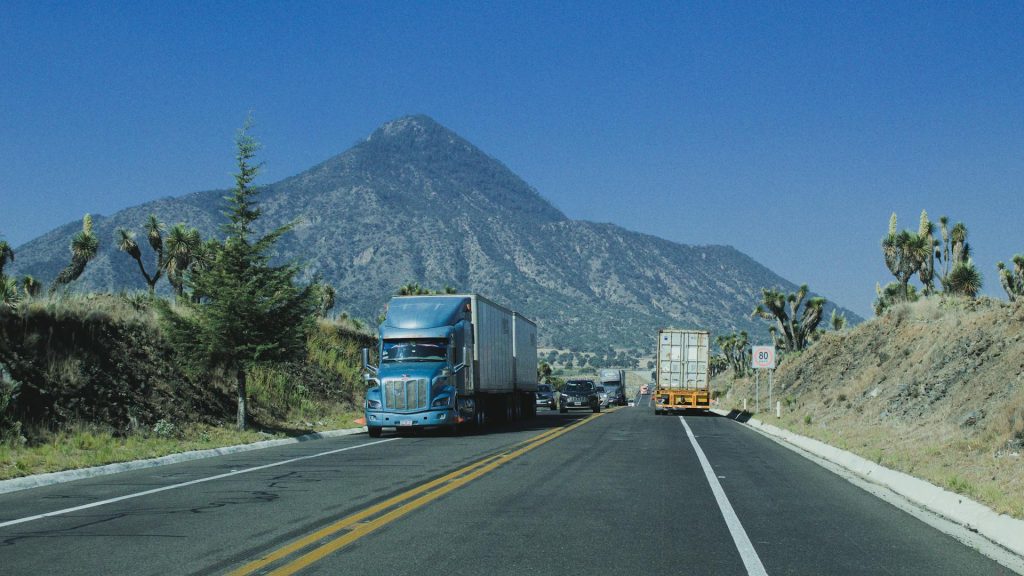
This decision can be especially important for box truck owner-operators, who may have opportunities to handle local, regional, or longer-distance freight depending on their equipment, authority, market, and customer base.
But which option is actually more profitable?
The answer is not as simple as comparing the pay for one load with another. A higher-paying long-haul load may require significantly more miles, fuel, time away from home, and operating expenses. A regional load may pay less per trip but allow an owner-operator to complete several runs in the same week.
The better question is not simply “Which load pays more?”
It is: Which operating model produces the best return for your truck, your time, and your business?
This guide compares long-haul and regional trucking for owner-operators, including revenue, fuel, maintenance, deadhead miles, compliance, scheduling, home time, and overall profitability. It also explains how to evaluate individual loads so you can make the decision using your own operating numbers rather than relying on gross revenue alone.
Long-Haul vs. Regional Trucking: What’s the Difference?
There is no single mileage threshold that universally defines long-haul and regional trucking. Definitions can vary by carrier, freight market, and the purpose of the analysis.
For example, the National Academies has used a 150-mile threshold for a specific research definition of a long-distance move, while noting that the distinction can vary depending on the dataset and analytical purpose.
For owner-operators, it is therefore more useful to think about long-haul and regional work as different operating models rather than relying on one fixed mileage cutoff.
What Is Long-Haul Trucking?
Long-haul trucking generally involves transporting freight over longer distances, often across multiple states and sometimes requiring several days away from the driver’s home base.
Long-haul work can provide access to longer lanes and higher gross revenue per load. However, an owner-operator also needs to account for additional fuel consumption, vehicle wear, lodging, food, deadhead miles, and time away from home.
Long-haul work may be attractive to owner-operators who:
- Prefer covering longer distances
- Are comfortable spending several days on the road
- Want to maximize miles
- Have equipment suited to longer-distance freight
- Can manage variable pickup and delivery locations
- Are willing to trade home time for additional earning opportunities
What Is Regional Trucking?
Regional trucking generally involves operating within a defined geographic area or group of states and returning to a home base more frequently.
Regional work can range from same-day routes to multi-day trips, depending on the freight market and customer requirements.
Regional trucking may be attractive to owner-operators who prioritize:
- More frequent home time
- Predictable operating areas
- Lower overnight expenses
- Familiar routes
- More frequent maintenance access
- The ability to complete multiple trips during a week
Regional does not automatically mean intrastate, however. A regional operation can still involve interstate commerce and may be subject to federal requirements depending on how the business and freight are structured.
That distinction matters because the regulatory requirements of an operation are not determined simply by how far the truck travels.
Why the Choice Matters for Owner-Operators
For an owner-operator, the route decision is also a business decision.
Unlike an employee driver, an independent owner-operator may be responsible for obtaining freight as well as covering fuel, maintenance, insurance, equipment, administrative expenses, and other operating costs.
Every trip can affect:
- Fuel costs
- Maintenance expenses
- Tire and brake wear
- Depreciation
- Insurance and fixed operating costs
- Deadhead miles
- Tolls and permits
- Lodging and meals
- Available working hours
- Home time
- Revenue per working day
This is why the highest-paying load is not necessarily the most profitable load.
A $3,600 load, for example, can look much more attractive than an $850 regional load. But if the $3,600 load requires substantially more miles and several days on the road, its effective return may be less impressive once operating costs and time are considered.
The same principle applies in reverse. A short regional load should not automatically be considered a better opportunity simply because the revenue per mile looks high.
A 280-mile load paying $850 may look excellent on a rate-per-mile basis. But if the truck spends hours waiting at pickup, has to deadhead 100 miles afterward, and cannot find another suitable load, the economics change.
For an owner-operator, the complete trip matters more than the advertised load rate.
Long-Haul vs. Regional: Revenue and Cost Comparison
To understand the difference, consider the following illustrative example for a box truck owner-operator.
These figures are examples for comparison purposes only. Actual revenue, fuel prices, fuel economy, maintenance costs, tolls, and other expenses vary by vehicle, lane, market, and operating conditions.
Illustrative Long-Haul Example
Assume:
- Total trip distance: 2,200 miles
- Gross revenue: $3,600
- Fuel economy: 8 MPG
- Assumed fuel price: $4.00 per gallon
- Fuel cost: approximately $1,100
- Hotel and food: $300
- Maintenance reserve: $200
- Tolls and miscellaneous fees: $75
Estimated contribution after the listed trip expenses:
$1,925
However, this should not be treated as the owner’s final take-home income.
It does not include every fixed or variable business expense, such as insurance, registration, financing, taxes, dispatch fees, or other overhead.
Illustrative Regional Example
Assume:
- Total trip distance: 280 miles
- Gross revenue: $850
- Fuel economy: 8 MPG
- Assumed fuel price: $4.00 per gallon
- Fuel cost: approximately $140
- No overnight expenses
- Maintenance reserve: $60
- Tolls: $15
Estimated contribution after the listed trip expenses:
$635
Again, this is an illustrative operating calculation rather than a guaranteed profit figure.
| Metric | Long-Haul | Regional |
|---|---|---|
| Gross revenue | $3,600 | $850 |
| Total miles | 2,200 | 280 |
| Gross revenue per total mile | ~$1.64 | ~$3.04 |
| Listed trip expenses | $1,675 | $215 |
| Contribution after listed expenses | $1,925 | $635 |
| Overnight stay | Yes | No |
| Potential home time | Lower | Higher |
The regional trip generates less money per load, but the vehicle travels substantially fewer miles.
If three comparable regional trips could realistically be completed in a week, the illustrative contribution would be approximately $1,905 before fixed business expenses.
That could be comparable to the contribution from one long-haul trip while providing more frequent opportunities to return home.
The important word is “realistically.”
An owner-operator should not assume that three profitable loads will always be available or that each trip will take the same amount of time.
This is one reason why comparing weekly operating performance can be more useful than comparing individual loads.
The More Important Question: How Much Do You Earn Per Mile and Per Working Day?
Looking only at revenue per load can be misleading.
Two loads can have very different economics even if the gross revenue appears similar.
A useful starting point is:
Revenue per Total Mile = Gross Revenue ÷ Total Miles Driven
This should include relevant deadhead rather than only the miles for which the customer is paying.
Another useful measure is:
Contribution Per Working Day = Contribution After Trip Expenses ÷ Working Days
A $2,000 contribution over four working days is not economically equivalent to a $1,000 contribution from a one-day operation.
For owner-operators, time is an operating resource just like fuel.
A route that keeps the truck moving but consumes several days of your available working time may not outperform a shorter route that allows you to complete several productive trips.
This becomes especially important when comparing long-haul and regional freight.
Fuel Costs, Deadhead, and Mileage
Fuel is one of the most important variable expenses for an owner-operator.
Long-haul operations naturally expose the truck to more miles on a single trip. More miles generally mean more fuel consumption, but the relationship between miles and profitability is more complicated than simply driving farther.
An owner-operator should consider:
- Loaded miles
- Empty or deadhead miles
- Fuel economy
- Current fuel prices
- Route elevation and terrain
- Traffic
- Idle time
- Detours
- Fuel surcharge arrangements, when applicable
For example, a load with a strong rate per loaded mile may become less attractive if the truck has to travel a significant distance empty before pickup or after delivery.
Deadhead Miles Can Change the Economics
Suppose a load pays based on 500 loaded miles but requires 150 additional unpaid miles to reach pickup.
The truck has actually traveled 650 miles to generate the load’s revenue.
That means an owner-operator should evaluate revenue against total miles driven, not only loaded miles.
A useful basic calculation is:
Revenue per Total Mile = Gross Revenue ÷ Total Miles Driven
This is not a complete profitability calculation, but it provides a better starting point than looking only at the advertised rate.
The same principle applies after delivery.
If a long-haul load leaves you in a market where the next profitable shipment is difficult to find, those future empty miles can become part of the economic cost of accepting the first load.
That is why experienced operators often think about the next load before accepting the current one.
Maintenance and Vehicle Wear
Mileage also affects maintenance.
Long-haul operations can increase the number of miles accumulated on the truck over a given period. More mileage can mean more frequent maintenance requirements and faster wear on components such as:
- Tires
- Brakes
- Suspension components
- Engine and drivetrain components
- Belts and hoses
- Fluids and filters
Regional operations do not eliminate maintenance costs.
In fact, frequent short trips, stop-and-go driving, loading activity, and urban traffic can also create substantial wear.
The difference is that regional owner-operators may have more opportunities to schedule inspections and preventative maintenance near their home base.
This can make maintenance planning easier, particularly for a small business operating a single truck.
For a one-truck business, downtime deserves the same attention as repair cost.
A $1,000 repair is one expense.
A $1,000 repair that keeps the truck unavailable for several days can also mean several days of lost revenue.
That is why maintenance should be evaluated not only as a cost-control issue, but also as an uptime strategy.
Load Availability and Turnaround Time
The profitability of a route depends heavily on what happens between loads.
Long-haul owner-operators need to consider the availability of a profitable return load.
If the truck delivers a load and then travels hundreds of miles empty before finding the next shipment, the revenue from the original load has to absorb those additional miles.
Regional operations can sometimes make it easier to build repeatable lanes, especially when an owner-operator develops relationships with recurring customers.
However, regional freight is not automatically more consistent.
Freight availability depends on the local economy, seasonality, customer demand, equipment requirements, and market conditions.
For owner-operators, the goal should be to minimize unproductive time and miles while maintaining a sustainable schedule.
A route that pays slightly less but consistently produces the next load may be more valuable than a higher-paying trip that leaves the truck in a weak market.
This is one of the biggest differences between evaluating a load and evaluating a business model.
Compliance and Operating Requirements
Distance alone does not determine an owner’s regulatory obligations.
Owner-operators need to understand whether their operation falls under federal or state requirements based on factors such as:
Interstate or intrastate commerce
Vehicle weight and configuration
Cargo type
Operating authority
Driver qualifications
Hours of service
Insurance requirements
State-specific requirements
USDOT Number Requirements
FMCSA states that companies operating commercial vehicles in interstate commerce generally must be registered with FMCSA and obtain a USDOT Number when the applicable requirements are met.
For example, FMCSA identifies vehicles with a GVWR, GCWR, GVW, or GCW of 10,001 pounds or more as one category that can trigger the requirement when the operation is involved in interstate commerce. Certain passenger and hazardous-material operations can also trigger registration requirements. Some states additionally require USDOT Numbers for certain intrastate carriers.
Because the requirements depend on the actual operation, owner-operators should use the current FMCSA guidance rather than assuming that a regional operation is exempt.
Operating Authority
Operating authority is a separate question from having a USDOT Number.
FMCSA explains that, in general, companies operating as for-hire carriers transporting federally regulated commodities owned by others, or arranging for their transportation for compensation in interstate commerce, may need interstate Operating Authority in addition to a USDOT Number. There are exceptions and different authority categories depending on the operation.
The important point for owner-operators is simple:
Do not determine your compliance obligations based only on how many miles you drive.
Your freight, business model, vehicle, operating area, and carrier status all matter.
Hours of Service
Hours of Service rules can also influence how much work an owner-operator can complete during a trip.
For property-carrying drivers subject to the federal HOS rules, FMCSA currently identifies:
An 11-hour driving limit after 10 consecutive hours off duty
A 14-hour driving window
A 30-minute break after 8 cumulative hours of driving 60/70-hour limits over 7/8 consecutive days
Specific provisions and exceptions that can affect individual operations
These rules can affect both long-haul and regional operations.
For example, a load that appears profitable on paper may become less attractive if pickup and delivery delays consume a significant portion of the driver’s available operating time.
For a more detailed explanation, owner-operators should review the current FMCSA HOS guidance and the rules applicable to their specific operation.
Home Time and Lifestyle
For many owner-operators, profitability is only one part of the decision.
Time away from home can have a significant effect on whether a particular operating model is sustainable.
Long-haul work may require:
Several days away from home
Overnight stays
Longer periods behind the wheel
Less predictable return times
More planning around meals, rest, parking, and lodging
For drivers who enjoy traveling and prefer maximizing miles, this may be an acceptable trade-off.
For others, repeated extended trips away from home can make the business difficult to sustain over the long term.
Regional operations can provide more frequent opportunities to return home.
Depending on the lane and customer requirements, an owner-operator may be able to:
- Return home several nights per week
- Schedule maintenance near home
- Maintain more predictable personal commitments
- Reduce overnight expenses
- Build familiarity with a defined service area
However, regional work can still involve early mornings, long days, traffic, multiple stops, and irregular schedules.
The best choice depends on the driver’s personal priorities as well as the economics of the business.
For owner-operators who are specifically trying to build a business that supports their personal life, the work-life implications deserve to be evaluated alongside revenue.
For a deeper look at this issue, see [Work-Life Balance for Independent Owner Operators] (URL-3).
Which Is More Profitable for an Owner-Operator?
There is no universal answer.
The more useful question is: Which operating model produces the best return for your truck, time, and business goals?
Long-haul may make more sense when: The rate is strong relative to total miles
Deadhead is low
- A reliable backhaul is available
- The truck is well suited to longer-distance operations
- The driver is comfortable spending more time away from home
- The trip generates strong revenue relative to the time required
Regional work may make more sense when: Freight is consistently available in your area
You can complete multiple profitable trips
Deadhead is limited
- Home time is important
- Overnight expenses can be reduced
- You have access to repeat customers or lanes
- Your truck is better suited to regional freight
There is also a third option that should not be overlooked: A flexible operating model that uses both.
An owner-operator may choose regional freight when local demand is strong and take a longer-distance opportunity when the economics justify the additional miles and time away from home.
The best strategy is often not choosing one category permanently, but knowing when each type of freight makes sense for your business.
A Simple Way to Compare Any Load
Before accepting a load, owner-operators should look beyond the gross rate.
Step 1: Calculate Total Miles
Include:
- Miles to pickup
- Loaded miles
- Miles from delivery to the next useful location
- Expected deadhead
Step 2: Estimate Fuel Cost
Use your actual fuel economy and a realistic fuel price.
Estimated Fuel Cost = Total Miles ÷ MPG × Fuel Price
Step 3: Add Trip-Specific Costs
Depending on the load, include:
- Tolls
- Parking
- Lodging
- Meals
- Permits
- Additional handling costs
- Other load-specific expenses
Step 4: Reserve Money for Maintenance
Do not treat all revenue left after fuel as profit.
A maintenance reserve helps account for future repairs and component replacement.
Step 5: Calculate Revenue Per Working Day
A $2,000 contribution over four days is not economically equivalent to a $1,000 contribution from a one-day operation.
Consider:
Contribution Per Working Day = Contribution After Trip Expenses ÷ Working Days
Step 6: Consider the Next Load
The first load may look profitable until you consider what happens afterward.
Ask:
- Where will the truck be after delivery?
- Is there likely to be another load?
- How many empty miles are expected?
- How long will the truck sit?
Can the next load take the truck toward home or another profitable market?
This is especially important for long-haul owner-operators.
A load should be evaluated as part of a sequence of moves, not as an isolated transaction.
Long-Haul vs. Regional: Pros and Cons
| Factor | Long-Haul | Regional |
|---|---|---|
| Gross revenue per load | Often higher | Often lower |
| Miles per trip | Higher | Lower |
| Home time | Usually lower | Usually higher |
| Overnight expenses | More likely | Often lower |
| Deadhead risk | Can be significant | Can be lower in established lanes |
| Maintenance planning | More difficult while away | Often easier near home base |
| Route familiarity | Lower | Often higher |
| Potential weekly load count | Lower | Potentially higher |
| Lifestyle flexibility | Lower for many drivers | Higher for many drivers |
| Best fit | Mileage-focused operators | Home-time and repeat-lane focused operators |
The table is a general comparison, not a guarantee.
Actual results depend on the freight market, equipment, customer base, operating strategy, and the operator’s own cost structure.
What About Box Truck Owner-Operators?
Box trucks can be used for a variety of freight and delivery applications, but the best route strategy depends on the truck’s specifications and the type of freight being transported.
For a box truck owner-operator, regional work can be attractive when the business is built around repeat deliveries, local distribution, scheduled routes, or short-to-medium-distance freight.
Longer-distance work can also be viable when the load produces enough revenue to justify the additional mileage and time away from the home market.
The important point is to match the freight opportunity to the equipment.
Before accepting a load, verify:
- Maximum payload
- Cargo dimensions
- Truck GVWR
- Available cargo space
- Insurance requirements
- Any required permits
- Delivery requirements
- Loading and unloading requirements
Whether the operation requires specific authority or registration
A 26-foot box truck should not be evaluated solely by its body length.
Regulatory requirements can depend on factors such as GVWR, actual operation, cargo, and whether the vehicle operates in interstate commerce. FMCSA’s current USDOT guidance should be used to determine whether the particular operation falls within federal registration requirements.
For box truck operators, another important consideration is the relationship between capacity and route economics.
A truck that can legally carry a particular shipment may still not be the right truck for that lane if loading requirements, cargo dimensions, delivery restrictions, or deadhead make the trip inefficient.
Building a More Sustainable Route Strategy
The strongest strategy may not be choosing only long-haul or only regional freight.
Instead, some owner-operators may benefit from maintaining flexibility.
For example, an operator could prioritize regional freight during periods when local demand is strong and consider longer-distance opportunities when the economics justify the additional miles and time away from the home market.
The key is to evaluate each opportunity using consistent numbers.
A sustainable route strategy should consider:
- Revenue
- Total miles
- Deadhead
- Fuel
- Maintenance
- Tolls and other trip expenses
- Time required
- Home time
- Next-load potential
- Cash flow and business overhead
This approach makes it easier to determine whether a load is actually improving the business.
It also helps an owner-operator avoid one of the most common traps in freight:
Confusing a busy truck with a profitable truck.
A truck can be moving every day and still produce weak returns if too much revenue is consumed by fuel, deadhead, downtime, maintenance, low rates, or inefficient scheduling.
Finding Freight That Fits Your Operating Model
Once you know whether long-haul, regional, or a combination of both fits your business, the next challenge is finding freight that matches your equipment and preferred service area.
For owner-operators, having access to multiple types of delivery and freight opportunities can make it easier to evaluate loads based on more than just distance.
This is particularly useful for operators who do not want to lock their business into a single route model.
An owner-operator may find that a regional shipment is the better choice during one part of the week, while a longer-distance shipment makes more sense when it provides a strong return toward the next profitable market or home base.
For more information about why shippers are increasingly using independent operators and how those relationships can work, see [Owner-Operators: Why More Shippers Are Successfully Working With Them in 2026] (URL-2).
Looking for More Freight Opportunities?
Courier Brokers provides an online network where owner-operators, truckers, couriers, and delivery providers can find posted deliveries and freight opportunities.
The platform can be useful for operators who want to explore different types of work, including local, regional, long-distance, LTL, FTL, and expedited opportunities.
Instead of limiting your business to one route type, you can review available opportunities and decide which loads fit your truck, schedule, and operating goals.
Explore Courier Brokers to find freight and delivery opportunities that fit your operation.
Frequently Asked Questions About Owner-Operators
Is long-haul trucking more profitable than regional trucking?
Not necessarily.
Long-haul loads often generate more revenue per trip, but they also involve more miles and can create additional fuel, maintenance, lodging, deadhead, and time costs.
Regional trucking can produce a stronger return when an owner-operator can complete multiple profitable trips with limited deadhead and lower overnight expenses.
The best option depends on contribution per mile, contribution per working day, and overall business expenses.
How many miles is considered long-haul trucking?
There is no single mileage threshold that applies universally.
Definitions vary by industry source and operational context. For a specific research study, the National Academies used 150 miles or more from pickup to delivery as a definition of a long-distance move.
For owner-operators, the more important question is how a route affects total costs, time, and profitability.
Is regional trucking better for owner-operators?
Regional trucking can be a strong option for owner-operators who value home time, predictable operating areas, and repeat freight.
However, regional freight is not automatically more profitable.
Load availability, rates, deadhead, traffic, operating costs, and customer demand all matter.
Can a box truck owner-operator do long-haul work?
Yes, depending on the truck, freight, customer requirements, and applicable regulatory requirements.
The truck’s GVWR, payload capacity, cargo dimensions, insurance, authority, and operating area should all be considered before accepting long-distance freight.
Do owner-operators have to follow Hours of Service rules?
Many owner-operators operating qualifying commercial motor vehicles in interstate commerce are subject to federal safety requirements, including applicable Hours of Service rules.
FMCSA’s current HOS guidance includes requirements such as the 11-hour driving limit after 10 consecutive hours off duty, the 14-hour window, and the 30-minute break requirement after 8 cumulative hours of driving, subject to applicable exceptions.
Because exceptions and applicability can vary, operators should review the rules that apply to their individual operation.
Do regional owner-operators need a USDOT Number?
Potentially, yes.
The requirement depends on factors including whether the operation is involved in interstate commerce and whether the vehicle or operation meets the applicable federal thresholds.
FMCSA also notes that some states require USDOT Numbers for certain intrastate carriers.
Owner-operators should check both federal requirements and the requirements of the states in which they operate.
Should I choose regional or long-haul trucking?
Choose based on your business goals rather than the gross pay of an individual load.
Regional work may be a better fit if home time, predictable lanes, and frequent trips are priorities.
Long-haul may be a better fit if you are comfortable spending more time away from home and can consistently secure loads with strong economics after fuel, deadhead, maintenance, and other expenses.
For many owner-operators, a flexible combination of both can be the most practical approach.
Final Takeaway: Choose the Route That Works for Your Business
The decision between long-haul and regional trucking is not simply a choice between higher pay and more home time.
For owner-operators, every route should be evaluated as a business transaction.
A long-haul load can generate substantial gross revenue, but thousands of additional miles can increase fuel consumption, maintenance needs, and time away from home.
A regional load may generate less revenue per trip but can allow an owner-operator to complete multiple runs, reduce overnight expenses, return home more frequently, and potentially build repeatable lanes.
The right choice depends on your:
- Truck and equipment
- Freight type
- Operating area
- Customer base
- Fuel economy
- Deadhead
- Maintenance costs
- Available working time
- Home-time priorities
- Revenue goals
The most sustainable owner-operators do not simply chase the highest-paying load.
They understand the true cost of every mile and evaluate how each load contributes to the profitability and long-term stability of the business.
Whether you operate a box truck or another type of commercial vehicle, comparing long-haul and regional opportunities using real operating costs can help you make better decisions and build a trucking business that works for both your finances and your lifestyle.